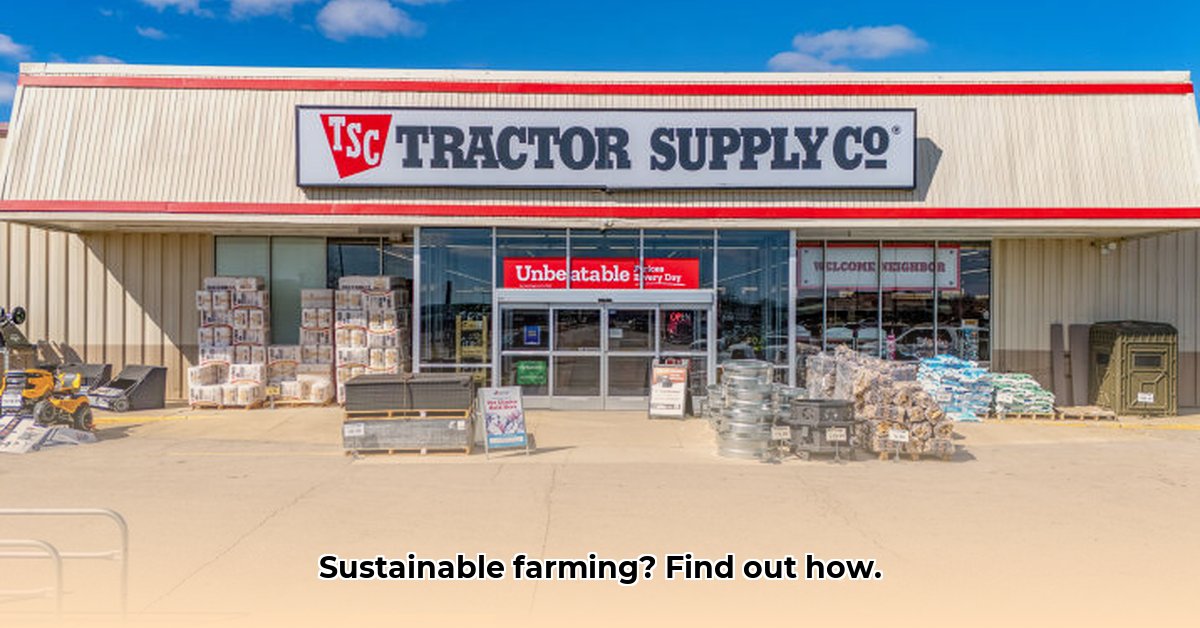
Tractor Supply Bay St. Louis, MS: Assessing the Role in Sustainable Agriculture
The Mississippi Gulf Coast presents unique challenges and opportunities for sustainable agriculture. Tractor Supply, a prominent agricultural retailer with a location in Bay St. Louis, MS, occupies a potentially significant position within this context. However, a comprehensive evaluation of its contribution to sustainable farming practices requires a nuanced investigation, examining both its direct offerings and its broader operational impacts. This report presents a preliminary assessment based on available data, while acknowledging significant knowledge gaps that necessitate further research. For information on equipment like riding lawn mowers, check out Tractor Supply's website.
Assessing Tractor Supply's Direct Contribution to Sustainable Agriculture
Tractor Supply's Bay St. Louis store serves a region encompassing agricultural communities such as Stennis Space Center and Long Beach. Its proximity suggests a potential role in supplying local farmers with necessary resources. However, currently available information lacks detail on the extent to which the store actively promotes or directly supports sustainable farming methods. For example, public information regarding partnerships with local farmers’ markets or the availability of organic seeds remains limited.
Key Questions Requiring Further Investigation:
- What specific sustainable agricultural products (e.g., water-saving irrigation systems, organic fertilizers, pest control alternatives) are stocked by the Bay St. Louis store?
- How does the range and availability of these products compare to those offered by retailers specializing in sustainable agriculture?
- Does Tractor Supply actively promote the use of sustainable agricultural practices through in-store materials or educational initiatives?
Beyond the Bay St. Louis Store: A Broader Perspective
Analyzing Tractor Supply's influence necessitates a broader perspective beyond the individual store's operations. The company's overall business model, particularly its supply chain, packaging, and transportation practices, significantly impacts its environmental footprint. A complete picture requires a comprehensive life-cycle assessment of its products and operations, which is currently lacking.
Critical Areas for Future Research:
- What is the environmental impact of Tractor Supply's supply chain, considering factors such as transportation emissions, packaging materials, and product sourcing?
- What sustainability certifications or initiatives are employed by Tractor Supply at the corporate level, and how are these reflected in the Bay St. Louis store’s operations?
- How does Tractor Supply compare to other agricultural retailers concerning its commitment to environmental sustainability?
Actionable Steps Towards Sustainable Farming in Bay St. Louis
Building a more sustainable agricultural system in the Bay St. Louis region requires a collaborative effort. The following actions represent crucial steps for various stakeholders:
1. For Local Farmers:
1. Conduct a thorough product assessment: Carefully evaluate the availability and suitability of sustainable agricultural products at the Tractor Supply store.
2. Express demand: Communicate directly with Tractor Supply management, expressing demand for specific eco-friendly products not currently stocked.
3. Collaborate:  Engage with fellow farmers and local agricultural organizations to amplify demands and facilitate collective purchasing.
2. For Tractor Supply Management (Bay St. Louis & Beyond):
1. Transparency and Inventory Management:  Clearly label and prominently display sustainable agricultural products within the store.
2. Develop a Sustainability Strategy:  Implement a comprehensive sustainability plan to integrate eco-friendly practices throughout operations. This could include sourcing sustainable products, reducing waste, and increasing energy efficiency.
3. Community Engagement:  Foster partnerships with local organizations focused on sustainable agriculture.
3. For Mississippi State and Local Government:
1. Impact Assessment: Conduct studies evaluating the influence of agricultural retailers on local sustainability targets.
2. Support and Incentives: Develop targeted assistance programs and incentives to encourage the adoption of sustainable agricultural practices by local businesses and farmers.
4. For Consumers:
1. Education: Increase awareness of sustainable agriculture practices.
2. Informed Purchasing:  Actively choose and prioritize sustainable agricultural products when shopping at Tractor Supply.
Addressing the Unknowns: Where Further Research Is Needed
Significant data gaps hinder a thorough assessment of Tractor Supply's role in promoting sustainable agriculture in Bay St. Louis. Future research should address the following:
- Comparative Analysis: A comprehensive comparison of Tractor Supply's offerings with those of other retailers specializing in sustainable agriculture is essential.
- Direct Farmer Feedback: Surveys and interviews with local farmers would provide invaluable insights into their experiences using Tractor Supply products.
- Policy Alignment: Examining the alignment of Tractor Supply's practices with relevant Mississippi state and federal policies related to sustainable agriculture is crucial.
Only through addressing these data gaps can a complete and informed assessment of Tractor Supply’s contribution to sustainable farming in Bay St. Louis be achieved. Such an evaluation is vital for fostering a vibrant and environmentally responsible agricultural sector along the Mississippi Gulf Coast.
Tractor Supply Bay St Louis Ms
Content about tractor supply bay st louis ms (Auto-generated fallback due to API error).
Tractor Supply Bay St Louis Ms
Content about tractor supply bay st louis ms (Auto-generated fallback due to API error).